
Superior UK Automotive MD Kevin Smith explains why proper maintenance and presentation are about far more than keeping a funeral vehicle looking clean
A modern hearse is a highly specialised vehicle, but in many respects it is still treated too much like a car that simply happens to cover relatively few miles.
That can be a mistake.
Funeral vehicles often spend considerable periods standing still and, compared with other commercial vehicles, may cover surprisingly low annual mileage. But low mileage shouldn’t mean low maintenance. In fact, time, rather than mileage, can be just as significant when it comes to maintaining a professional funeral vehicle.
For a funeral director, the standard should be simple: a hearse must be safe, reliable, fit for purpose and presented to a standard that reflects the service being provided. Although the hearse itself doesn’t usually carry members of the public, it is a highly visible and important part of the service being delivered to families, and the vehicle used to transport the deceased must be maintained to the highest professional standards. Safety has to come first.
That means following the manufacturer’s recommended service schedule and servicing by both time and mileage. Fluids and components still deteriorate with age even when a vehicle is doing relatively little work. Brake fluid, for example, has a recommended replacement interval irrespective of mileage. Air-conditioning is another area that can easily be overlooked.
Presentation is equally important. The hearse is part of the funeral director’s public image. Families notice the vehicle, and a poorly presented car can undermine confidence in an otherwise professional service.
A routine matters
The best approach is preventative rather than reactive.
Every funeral director should have a clear distinction between their primary vehicle and their back-up vehicle, but the back-up vehicle should never become the forgotten vehicle. A car that has been standing for several weeks can develop problems precisely when it is suddenly needed.
As a minimum, oil and fluid levels and tyre pressures should be checked weekly. If a back-up vehicle is likely to remain unused for more than a couple of weeks, using a suitable battery maintainer is sensible. Modern vehicles contain a considerable amount of electronic equipment, and these systems continue to draw power even when the vehicle is parked.
After every funeral, the vehicle should be properly cleaned, including the coffin chamber, deck and surrounding areas. Flowers are one of the biggest sources of unpleasant odours. Water from arrangements can spill, while petals and other debris can find their way into gaps, rails and other difficult-to-reach areas. A thorough vacuum after each funeral prevents these problems from building up.
Handles and other frequently touched areas should also be wiped down regularly, particularly during periods of seasonal illness.
Protecting the finish
A black hearse shows everything. Dust, water marks, swirl marks and fine scratches are immediately visible, which makes the washing process particularly important.
One of the biggest mistakes is reaching for aggressive chemicals. Traffic Film Remover and wheel acid cleaners can be extremely harsh and, if used incorrectly, can strip protective finishes and damage paintwork. These products have their place in professional vehicle cleaning, but they are not something I would recommend for routine cleaning.
A good-quality pH-neutral shampoo, suitable washing equipment and a quality wax are a much better approach.
I recommend applying a good hard wax approximately once a month. Unlike many liquid waxes, a hard wax can build up protective layers and is particularly useful on a vehicle that is washed frequently. It also gives the paintwork the deep gloss finish expected of a professional funeral vehicle.
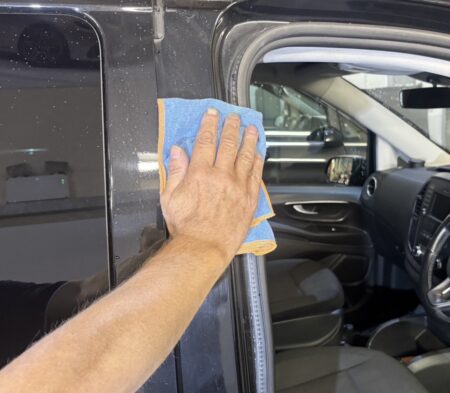
Pay particular attention to areas around door handles. Rings, watches and handbags can cause fine scratches in these high-contact areas, so additional protection here is worthwhile.
The equipment used is just as important as the products. For black vehicles in particular, I recommend the two-bucket method of washing: one bucket contains the shampoo solution and the other clean water for rinsing the wash mitt. The mitt is rinsed in the clean-water bucket before going back into the shampoo, helping to remove dirt and grit rather than transferring it back onto the paintwork. It is a simple routine, but one that ca make a significant difference in preventing fine scratches and swirl marks.
A dedicated wash bucket with a grit guard is also useful, helping to keep contaminants away from your wash mitt as you work. And if you drop your sponge or wash mitt on the ground, don’t use it on the paint again. Even a tiny piece of grit can create scratches.
I would also avoid dragging a hose across the bodywork, particularly over vulnerable areas such as wings and pillars.
Look after the interior
The same attention to detail should continue inside the vehicle.
The rear deck and rollers should be cleaned regularly using a suitable anti-bacterial product. The important point is not to spray excessive amounts directly onto the vehicle. Spray onto a microfibre cloth and then wipe the surface. That reduces the risk of liquid finding its way into areas where it shouldn’t be.
Leather requires particular care. It is a natural material and needs to be cleaned and conditioned regularly to prevent it drying out and cracking. In a working hearse, I would look at treating real leather approximately every six months.
Synthetic leather is considerably simpler and can generally be maintained with a damp cloth and appropriate cleaner. Cloth upholstery can be treated with a suitable foam cleaner or wet-vacuumed where necessary.
Carpets should also receive a deeper clean periodically. A wet vacuum at least once each spring, after the demands of the winter period, is a sensible baseline. Over-cleaning carpets can itself accelerate deterioration, so the aim should be thorough but not excessive.
Don’t forget the specialist equipment
A hearse has areas that simply don’t exist on a conventional car.
The coffin deck, rails, rollers, glass roof, LED lighting and coach-built trims all require attention. The deck can be gently cleaned and buffed using a suitable household polish and a double-sided microfibre cloth, using the firmer side for marks and the softer side to produce the final finish.
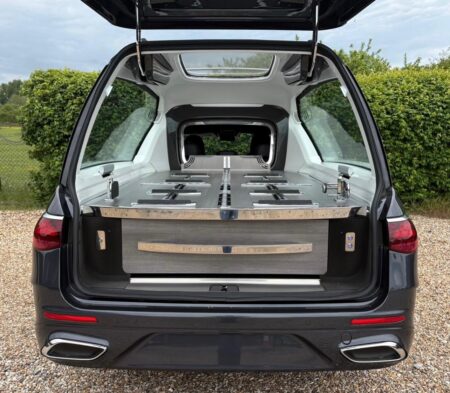
The principle throughout is to be gentle and consistent. These vehicles are designed to look exceptional, but their specialist components need to be maintained rather than aggressively cleaned.
Think about the seasons
Summer and winter create different challenges.
In hot weather, dust can be surprisingly damaging to paintwork. If a black car is covered in dust, don’t simply wipe it off. The dust can act like an abrasive and create fine scratches. Rinse the vehicle thoroughly with water first.
It is also better to wash in the shade during hot weather. If the panels dry too quickly, water marks can be left behind. Where possible, a de-ionised or purified water system, similar to those used by professional window cleaners, can help produce a much cleaner finish without mineral spotting.
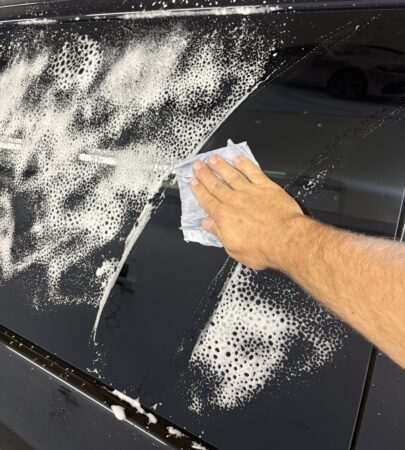
Winter brings a different problem: road salt. Salt is highly corrosive and should be rinsed from the vehicle regularly, particularly around the underside and wheel areas.
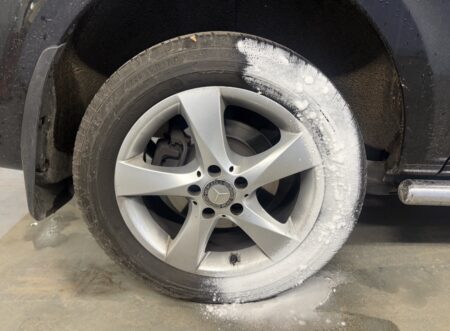
Tyres also deserve regular attention. Pressure should be checked routinely, particularly when temperatures fluctuate, and care should be taken not to use a pressure washer excessively close to the tyre.
Avoid the quick fix
Perhaps the biggest mistake I see is trying to save time.
Pressure washers can be useful, but excessive pressure can force water behind fittings, mouldings and other areas where it can remain trapped and eventually contribute to corrosion. For routine cleaning, a conventional hose can be a safer long-term approach.
The same applies to aggressive chemicals, unsuitable cloths and simply wiping dirt from a dusty vehicle. A shortcut that saves five minutes today can create an expensive problem further down the line.
For most funeral directors, I would also recommend bringing in a professional detailer every six to twelve months for a proper deep clean. That gives the operator a clean baseline from which regular maintenance can keep the vehicle looking its best.
Ultimately, there is no complicated secret to maintaining a professional funeral vehicle.
My golden rule would be simple: wax, wax and wax again.
A well-protected car is easier to keep clean because dirt doesn’t adhere as readily, while the paintwork is protected from the demands of everyday use.
Be thorough, be consistent and don’t wait for something to go wrong before dealing with it.
A well-maintained hearse will not only look better. It will remain safer, more reliable and fit for purpose for longer. And in an industry where the vehicle is such a visible part of the service provided, that level of care is an important part of maintaining professional standards.